Prerequisites
The Bottom Line on Carbohydrates
Sugars are uncoupled speed; starches are coupled freight trains; fiber is an indigestible bond that never becomes blood glucose.
1. Burn immediately (explosive neural/muscle work), 2. Store in finite glycogen tanks, 3. Overflow into adipose tissue.
Skeletal muscle cannot absorb fructose directly; the entire load routes straight to the liver. Concentrated liquid fructose overworks liver synthesis.
An apple and soda share grams, but whole-food fiber slows glucose absorption into a calm, sustained curve rather than a chaotic spike.
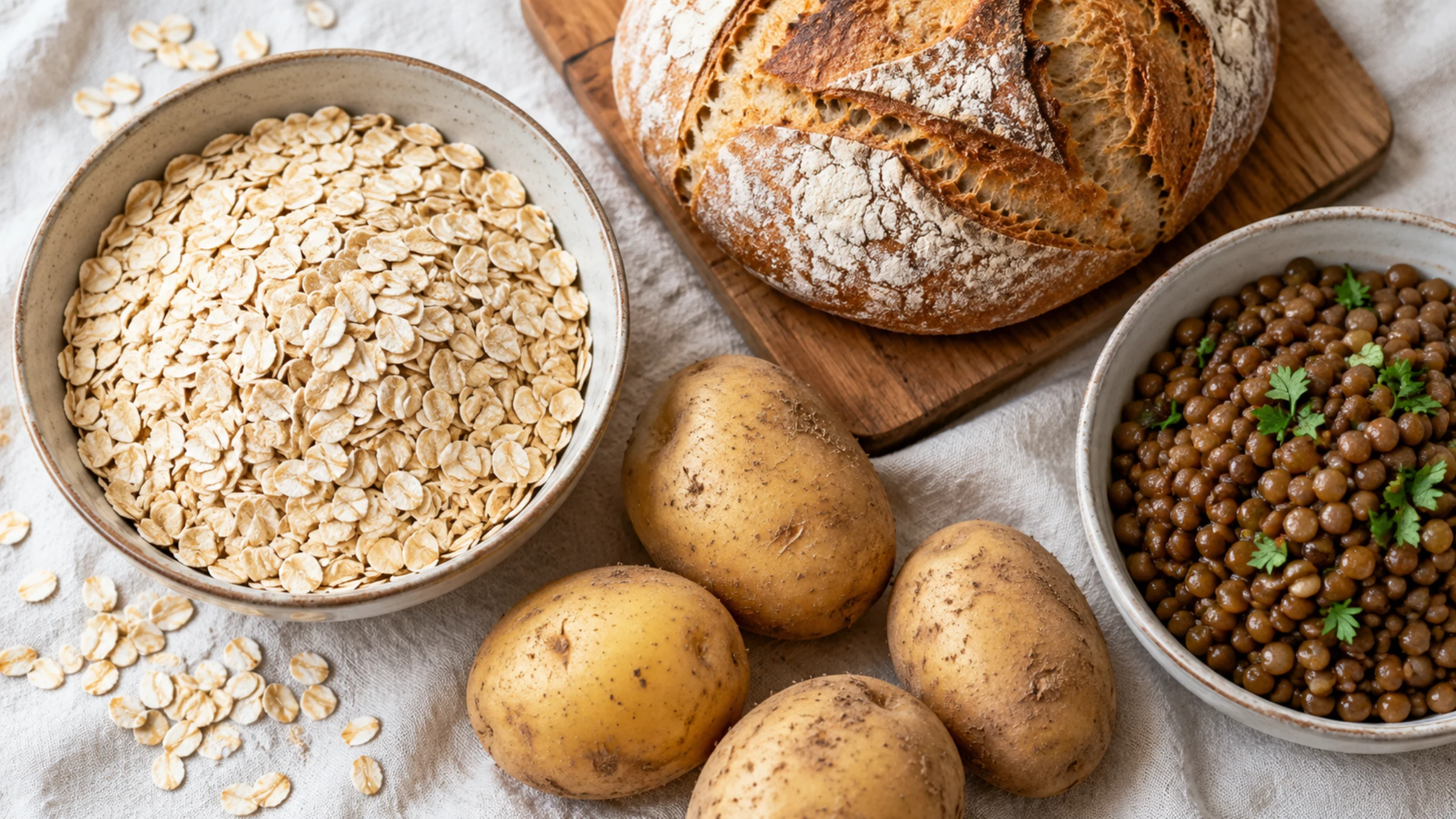
Sit down to breakfast with a warm bowl of rolled oats topped with berries, or dish up a simple dinner of rice and beans.
Along with the fuel that meal provides, you are eating carbohydrate: your body's primary, most accessible source of daily energy. If "carbs are bad" were true, staple foods like rice, potatoes, oats, and lentils could not have sustained civilizations across human history. Yet if "a carb is a carb" were true, drinking a bottle of soda would affect your body the exact same way as eating a bowl of lentils.
Carbohydrate is not a single, uniform fuel. It is a broad family of plant-based foods, from individual sugar units to complex, fibrous roots. How your body responds to them depends on three realities: which sugar units they contain, how those units are linked, and the physical packaging that surrounds them.
Simple Sugars, Three Different Forms
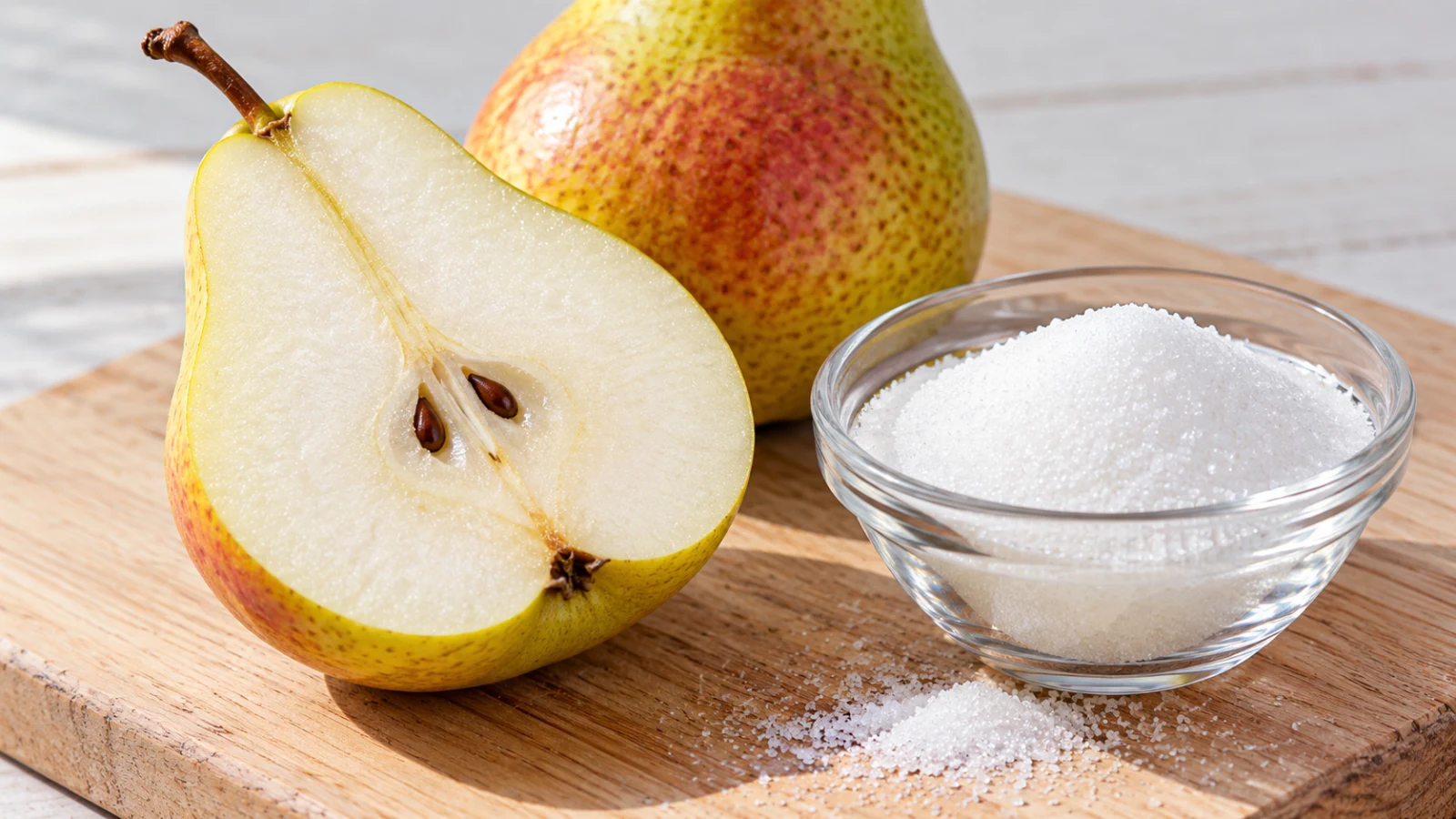
Strip away the plant structure, and carbohydrates are built from basic chemical units called simple sugars. In the human diet, two matter above all others: glucose and fructose.
Glucose is your body's universal fuel currency; almost every cell can take it up and burn it for energy. Fructose is the sweet sugar found naturally in fruit and honey. Plants assemble these building blocks into three distinct forms:
- Sugars are short chains of one or two sugar molecules, or single units on their own. Glucose and fructose are single units. Table sugar (sucrose) is a two-unit pair: one glucose molecule bonded to one fructose molecule. Lactose, the sugar in milk, is another two-unit pair. Because these chains are so short, your digestive system breaks them down and absorbs them into your bloodstream with minimal effort.
- Starches are long chains of hundreds or thousands of glucose units linked together like cars in a freight train. Plants store energy in starches, which is why we find them in grains, legumes, and tubers like rice, oats, lentils, and potatoes. Starches are made exclusively of glucose. Your digestive system has to break each link before cells can use that fuel. How fast that happens depends on packaging. In intact foods like lentils or whole beans, tough cell walls shield the starch from enzymes, slowing digestion to a steady trickle. In refined or heavily cooked starches, enzymes access those glucose chains much faster.
- Fiber is also made of linked sugar molecules, but human digestive enzymes cannot break their chemical bonds. Because your body cannot break those bonds, fiber passes through your stomach and small intestine without becoming blood glucose. Instead, it enters your colon, where it adds bulk to stool, feeds beneficial gut bacteria, and forms a physical mesh that slows the digestion of the rest of the meal.
The 3 Carbohydrate Chain Lengths
How chemical polymer structure dictates digestion speed and glycemic impact
Simple Sugars
Monosaccharides (glucose, fructose) and disaccharides (sucrose, lactose). Zero digestive cleavage required; absorbed across the brush border via SGLT1 in under 15 minutes.
Complex Starches
Amylose and amylopectin polymers of 300–1,000 glucose rings. Alpha-1,4 and alpha-1,6 bonds cleaved progressively by salivary and pancreatic alpha-amylase over 1–3 hours.
Structural Fiber
Cellulose and beta-glucans with beta-1,4 glycosidic bonds. Human enzymes lack beta-glucosidase; enters the colon intact to fuel bacterial fermentation into short-chain fatty acids.
Three Fates for Glucose

Once starches and sugars are broken down into individual glucose molecules and absorbed into your bloodstream, your body handles that incoming fuel in three clear steps:
- Burn it immediately: Glucose is your body's fastest, most accessible fuel. It is your brain's preferred fuel, supplying the continuous energy needed for cognition and nerve signaling. Your muscles also burn it eagerly during demanding effort like a sprint or a heavy lift.
- Store it as glycogen: Glucose you do not burn right away gets packed into glycogen, a storage fuel held in your muscles and liver. These tanks have strict physical limits. Muscle glycogen stays local to the muscle that stored it, reserved for physical movement. Liver glycogen serves as the central fuel reserve for your whole body, releasing a steady trickle of glucose into your blood between meals to keep your brain fueled.
- Convert the overflow into fat: Once immediate energy needs are met and your glycogen tanks are full, extra glucose cannot sit in storage as carbohydrate. Your liver converts the remaining surplus into body fat.
That third step gave carbohydrates an unfair reputation as uniquely fattening. Carbohydrate is not inherently fattening; fat storage reflects a supply-and-demand mismatch. A bowl of rice eaten after hard exercise enters muscles with depleted glycogen tanks and is pulled straight into storage. The same bowl of rice eaten after a day of sitting motionless meets tanks that are already full. With nowhere left to park the fuel, the surplus is stored as fat. Same meal, different demand, different outcome.
Fructose and the Liver
Table sugar, high-fructose corn syrup, and fruit are not pure glucose. They deliver a mix of glucose and fructose. Your body handles those two halves through entirely different routes.
Glucose is used body-wide. Muscle tissue, fat cells, the heart, and the brain all take up glucose directly from your blood.
Fructose takes a much narrower door. In meaningful amounts, it is processed almost entirely by your liver, because other tissues lack the enzymes to use it directly.
In modest amounts, the liver handles fructose smoothly as routine work, converting some into usable energy or liver glycogen.
The problem arises with large, fast, concentrated doses. When a flood of fructose hits the liver, the organ cannot turn it away or burn it all. Forced into overdrive, the liver routes the excess toward fat synthesis within the liver itself, contributing over time to fatty liver and metabolic strain.
The liver is an effective processing organ, but it has strict limits on the speed and volume of fructose it can safely handle.
Intrinsic vs. Added Sugar
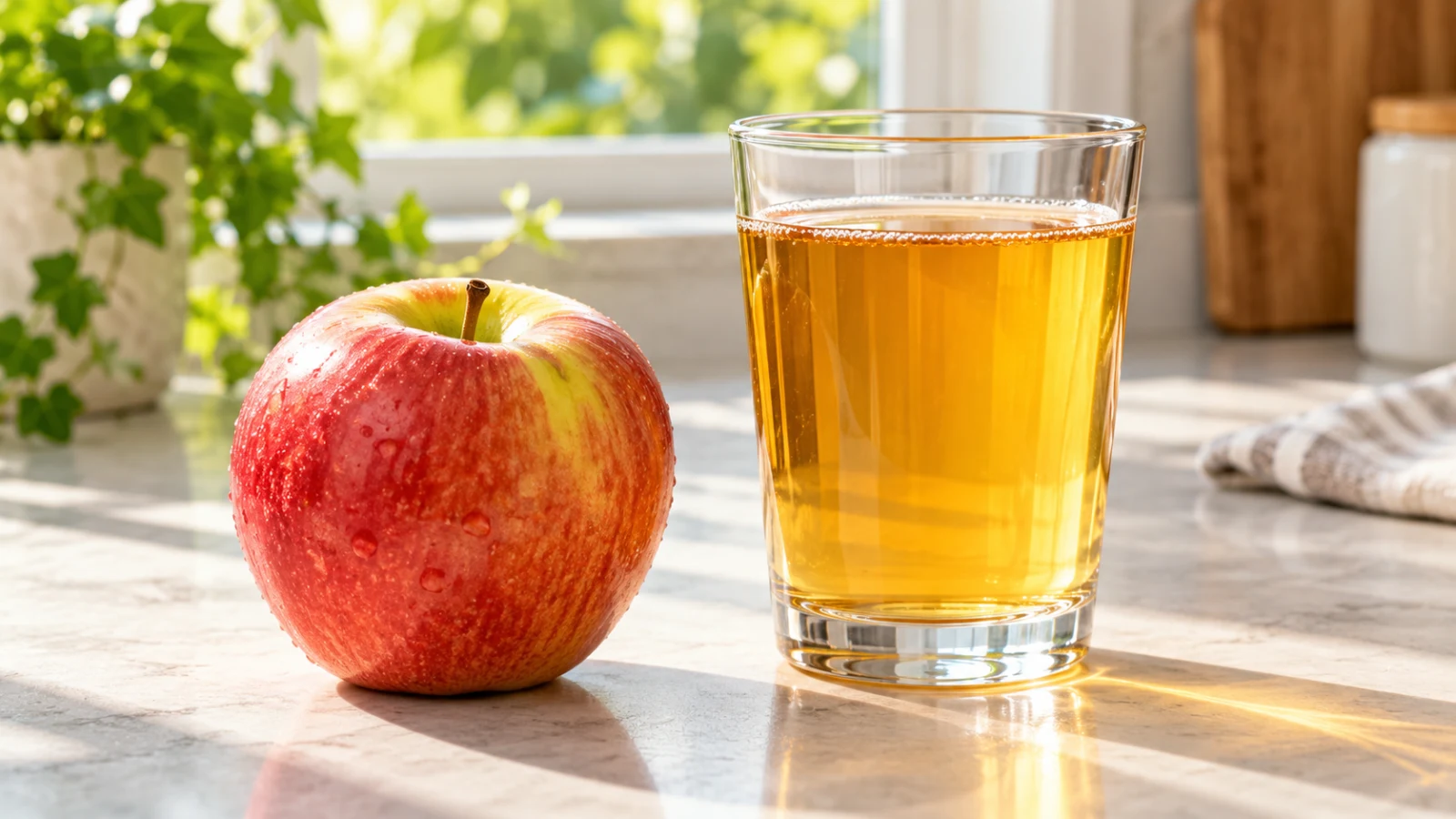
To see why carbohydrate sources affect your body differently, look at their physical architecture: the difference between intrinsic and added sugar.
Intrinsic sugar is sugar built inside the cellular matrix of a whole plant food, such as an apple or a cup of berries.
In a whole apple, sugar molecules are locked inside plant cells reinforced by fiber and water. Your digestive system has to break that structure down before enzymes can reach the sugars. That breakdown takes time, keeping absorption gradual and steady while the accompanying fiber moves on to nourish your gut bacteria.
Added sugar is sugar extracted from plants and dissolved with its natural packaging removed.
Liquid sugar is the extreme case. In soda, sweetened tea, or fruit juice, all fibrous cell walls have been stripped away. With no physical structure for your digestive system to break down and no chewing required, free sugars exit the stomach in minutes and pour into your bloodstream in a sudden flood. Fruit juice behaves much like soda for this exact reason: pressing removes the fibrous matrix, turning an intact, slow-digesting food into a fast-absorbing liquid.
Key idea
An apple and a glass of juice may carry similar sugar grams on paper. Yet one arrives locked inside a fibrous container, while the other arrives entirely unshielded. The packaging dictates the biological response.
The Carbohydrate 2x2 Quadrant
Classifying carbohydrate sources by cellular packaging vs. metabolic clearance rate
Optimal Athletic Fuel
Lentils, sweet potatoes, steel-cut oats, quinoa, black beans. Dense glycogen replenishment with structural fiber that buffers gastric emptying and prevents insulin spikes.
Metabolic Surge & Crash
White flour, syrups, candy, pastries, refined cereals. Rapid enzymatic cleavage floods the portal vein with glucose, triggering reactive hyperinsulinemia and subsequent rebound hunger.
Microbiome & Satiety
Cruciferous vegetables, spinach, asparagus, blackberries. High water and fiber volume triggers gastric mechanoreceptors for fullness while feeding colonic microbes.
Transient Hydration
Watermelon, diluted fruit waters, electrolyte broths. Fast gastric clearance, providing light glucose replenishment during high-sweat endurance sessions.
Fast Fuel and Slow Fuel
Think of fueling your daily energy like managing a fire.
Refined, fast-absorbing carbohydrates act like kindling: soda, candy, fruit juice, and snacks made from finely ground flour. Kindling catches instantly and throws off an intense flare of heat. But it burns out quickly. Within an hour or two, the fire dies down, leaving you looking for another handful of kindling to keep going.
That loop creates the familiar energy spike and crash. A rapid flood of blood glucose triggers a sharp hormonal response to clear it, driving circulating fuel down quickly. You feel a brief lift, followed by fatigue, brain fog, and an urgent craving for more fast fuel. That crash is not a lack of willpower; it is the predictable mechanics of fast-burning fuel.
Slow-absorbing carbohydrates act like seasoned hardwood logs: oats, lentils, beans, brown rice, and sturdy root vegetables. Because these foods retain their dense plant structures and fiber, they take longer to catch. Once burning, however, they provide steady, dependable energy for hours.
Neither fuel is bad. Kindling has a clear purpose around hard training, when working muscles demand rapid fuel and empty glycogen tanks can absorb incoming glucose without delay.
The mistake is building an entire quiet day out of kindling while sitting at a desk. With full glycogen tanks and nowhere for the energy to go, fast fuel creates an erratic cycle of spikes and crashes. For most of your week, your metabolism thrives on seasoned logs.
That crash is not a lack of willpower; it is the predictable mechanics of fast-burning fuel.
A Brief Bridge to Insulin
Every time carbohydrates raise glucose in your bloodstream, your pancreas responds by releasing the hormone insulin.
Insulin acts as a vital messenger, signaling muscle, liver, and fat cells to take up glucose from the bloodstream so it can be burned for immediate work or packed into storage, keeping blood sugar within a safe range.
How that signaling system works, and what happens when chronic fuel overload causes cells to resist those signals, is covered in depth in Guide 5: Blood Sugar and Insulin.
Checking Your Next Meal
When you look at your next meal, use a quick visual check:
- Build around whole-food packages: Make intact carbohydrates, such as oats, brown rice, beans, lentils, potatoes, and whole fruit, your daily foundation rather than sweetened drinks or processed snacks.
- Keep the fiber intact: Include vegetables, legumes, or whole grains to provide physical structure, steady the release of glucose, and feed your gut bacteria.
- Match fast fuel to activity: If you choose fast-acting carbohydrates or sweet foods, place them close to physical movement when working muscles can readily burn or store incoming glucose.
Educational content only. It is not individual medical advice.