Prerequisites
What Protein Actually Does
Your muscles, tendons, skin, digestive enzymes, and immune proteins are all built from protein, and your body replaces them every day.
Twenty amino acids build the proteins in your body. Your cells make eleven of them. The other nine have to come from your food.
Fat and carbohydrate have reserves. Protein does not. Your body needs a steady supply from food to keep rebuilding tissue.
Protein helps a meal feel satisfying, but fullness comes from the whole plate, your day, and your sleep, not from one food alone.
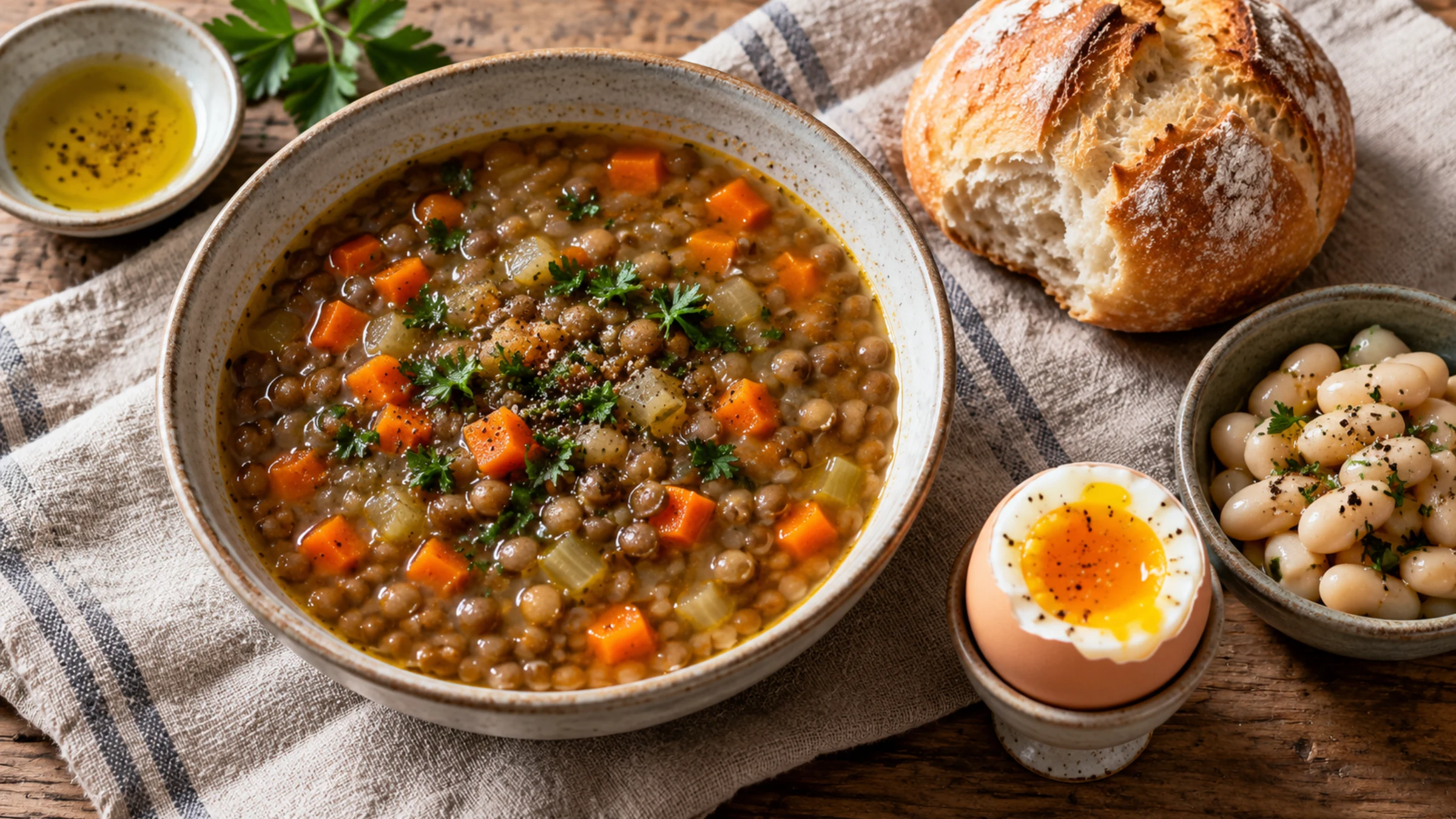
Sit down to lunch with a warm bowl of lentil soup and a crusty roll.
Along with the energy that meal provides, you are eating protein: the physical material your body uses to build, repair, and maintain tissues every day.
Amino Acids: The Building Blocks
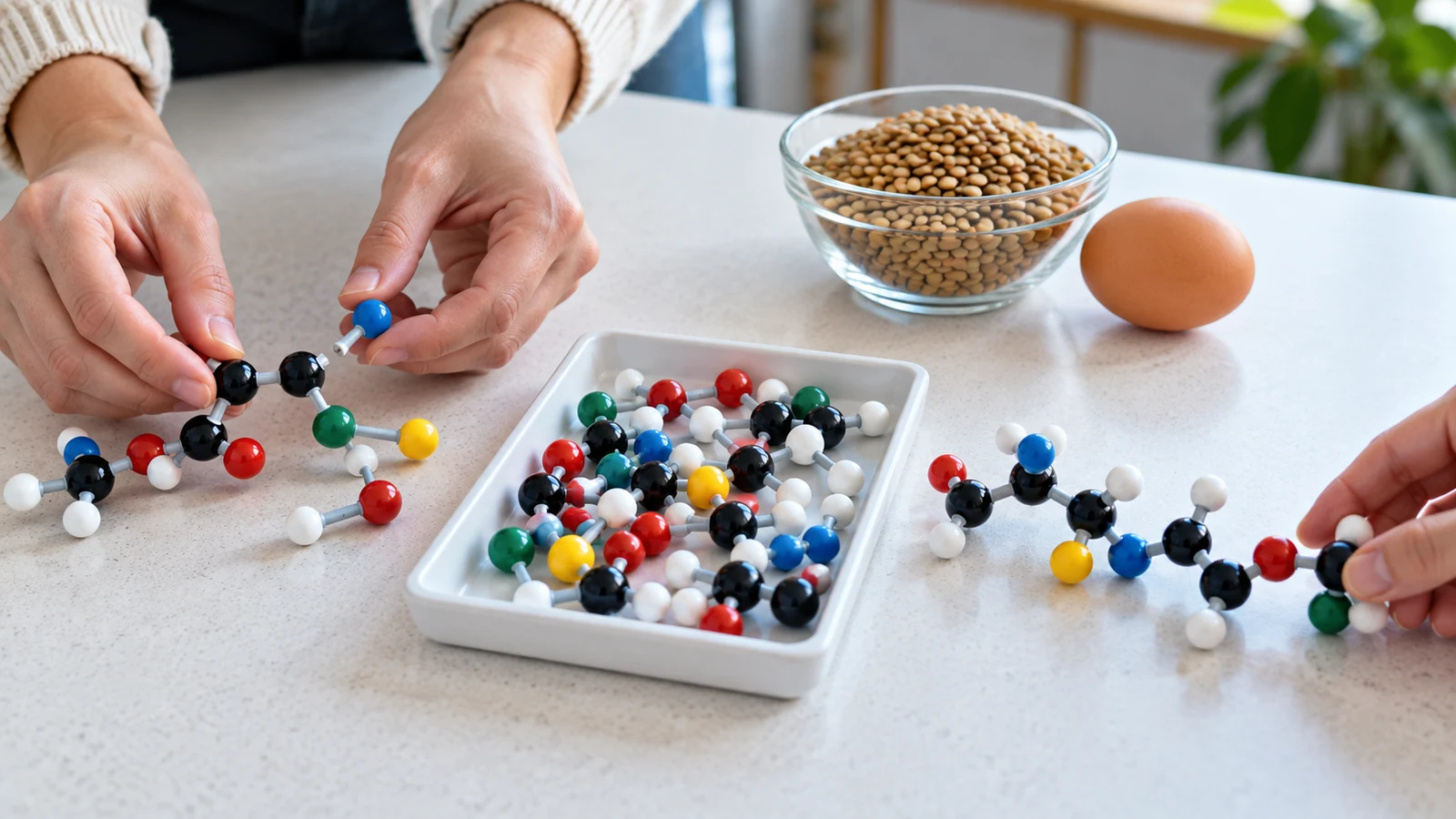
Proteins are made of smaller units called amino acids, linked together in long chains. When you eat protein from eggs, beans, chicken, or yogurt, your digestive system unlinks those chains into individual amino acids. Your cells then rearrange them into whatever proteins your body needs.
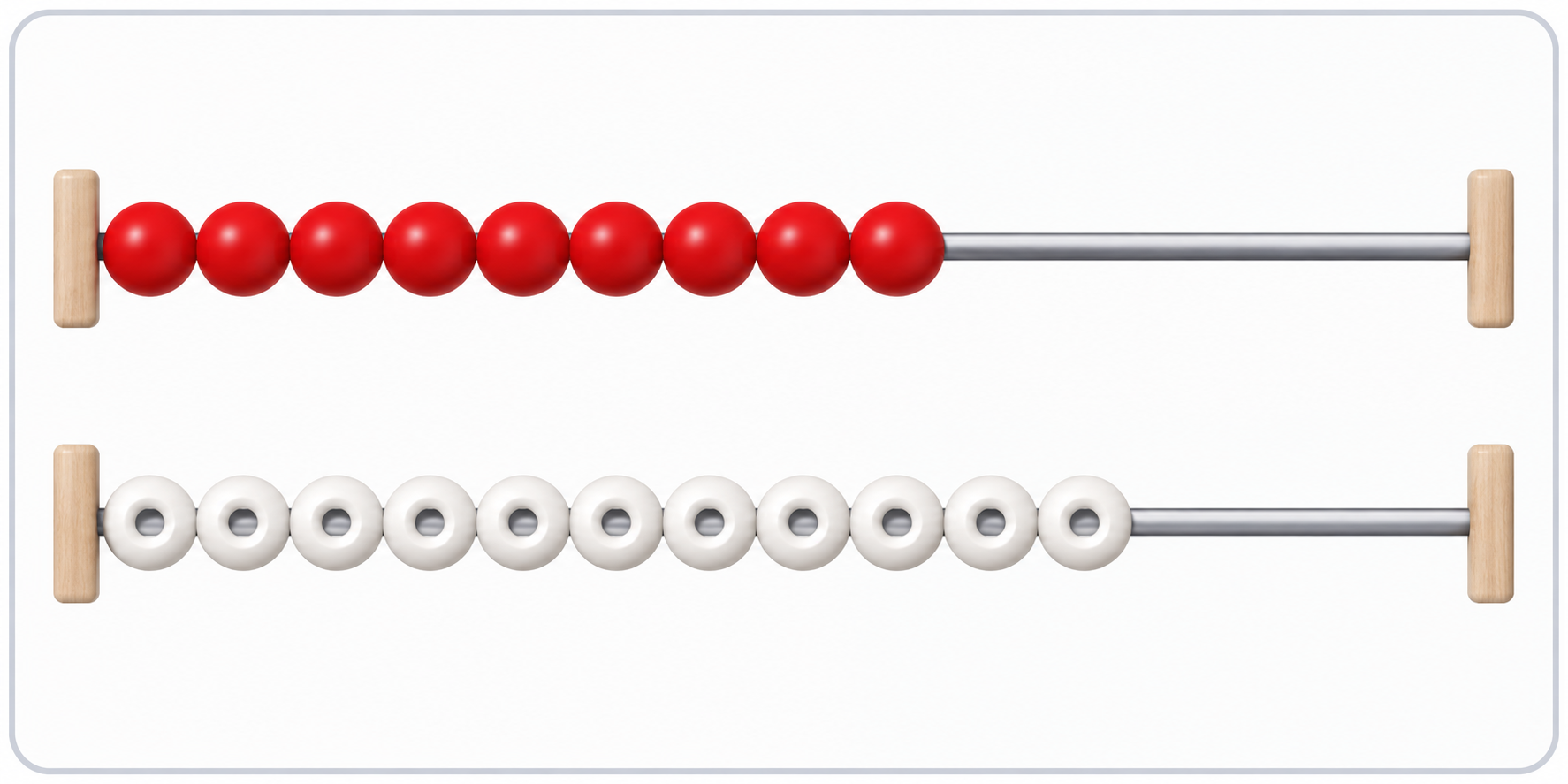
Your body uses twenty amino acids:
- Nine essential amino acids: Your body cannot make these from scratch, so you have to get them from the food you eat. In nutrition, "essential" does not mean they are more important than the others, since your body needs all of them to function. It simply means they must come from your diet.
- Eleven nonessential amino acids: These are not optional in your body, but your cells have the tools to build them internally from other nutrients.
Your body can usually make those other eleven on its own, but during serious illness or recovery, your need for specific amino acids can temporarily exceed what you can produce.
Twenty Blocks, Nine You Must Eat
Three Biological Jobs
Protein is often treated as if it only matters for gym workouts, but it does essential work all across your body:
- Movement and Structure: Proteins in your muscles slide past each other to contract and produce movement. Other proteins, like collagen, give strength to your tendons, ligaments, skin, and bones.
- Enzymes: Most enzymes are proteins that speed up necessary chemical reactions in your body, such as breaking down the food you eat so your cells can absorb and use the nutrients.
- Antibodies: Your immune system builds specialized proteins called antibodies that recognize foreign invaders, like viruses and bacteria, and help neutralize them.
Protein can also supply energy at about four calories per gram, contributing to daily fuel needs alongside carbohydrates and fats. But what makes protein irreplaceable is this ongoing upkeep.
Turnover, Recycling, and Daily Supply
Your body is constantly replacing older proteins. Every day, existing proteins in your cells are broken down, and new ones are built to take their place.
Your body is efficient with these materials. When tissues break down proteins during routine upkeep, many of their amino acids are gathered into an internal pool and used again.
However, unlike energy stored in body fat, your body has no dedicated store of spare protein waiting around for future weeks. At the same time, you lose small amounts of protein each day through ordinary maintenance, such as shedding skin cells, growing hair, and renewing the lining of your gut.
Because those losses happen continuously, you need a regular supply of protein from food. A single meal that is light on protein is not a crisis: your internal pool easily buffers normal daily fluctuations. Over days and weeks, though, new protein coming in is what keeps that pool replenished.
Animal and Plant Sources
You can get the amino acids you need from both animal and plant foods:
- Animal sources (meat, poultry, fish, eggs, and dairy) contain all nine essential amino acids in proportions that closely match what human cells need.
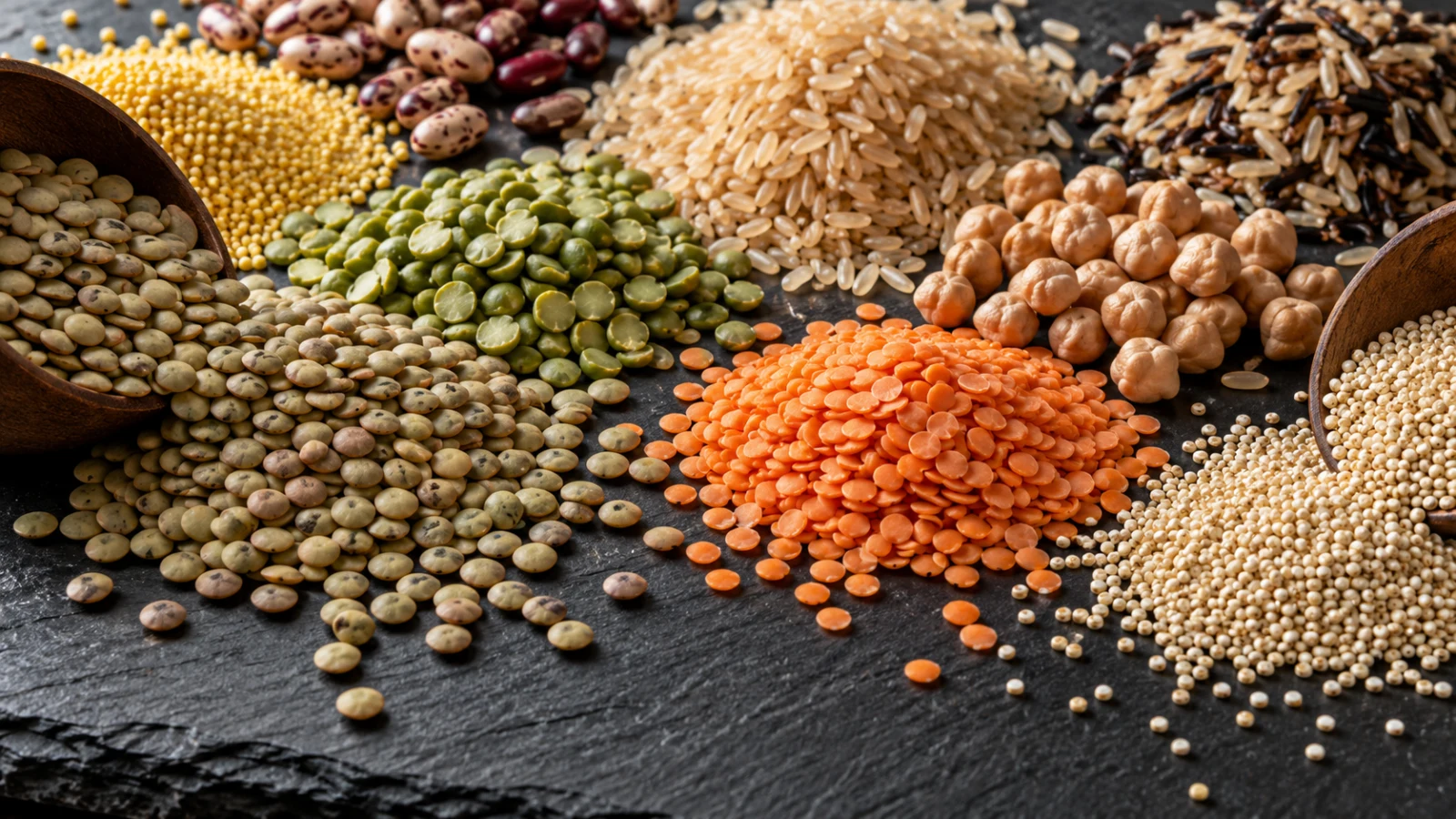
- Plant sources (beans, lentils, soy, nuts, seeds, and whole grains) also provide all nine essential amino acids, though usually in different proportions. For example, grains tend to be lower in lysine, while beans and lentils have plenty of it.
You do not have to carefully pair complementary plant proteins at the same meal, like eating rice and beans on the exact same fork, to get what you need. Your body draws from the amino acids you take in across the entire day. As long as you eat enough total food, enough total protein, and a reasonable variety of sources throughout the day, your body gets the building blocks it requires. Animal foods are a convenient, concentrated source of protein, but they are not mandatory.
Food Weight vs. Protein Content
It is easy to confuse what a food weighs on a scale with how many grams of protein it provides.
Consider a large egg: the edible portion (without the shell) weighs around 50 grams on a scale, but it supplies about 6 grams of protein. Fifty grams of food does not mean fifty grams of protein.
Protein foods also come packaged with other nutrients:
- A bowl of cooked lentils brings plant protein with complex carbohydrates, fiber, iron, and folate.
- A couple of eggs bring animal protein with fats, choline, and vitamins.
Key idea
When you choose a protein source, you are choosing the entire package that comes with it.
Food Weight Is Not Protein

Protein and Fullness
Protein can help a meal feel satisfying, but it does not guarantee fullness by itself. How full you feel depends on the whole meal and your day: food volume, fiber, water, sleep, and whether you ate enough total energy.
Hunger is not a test for protein deficiency. Getting hungry a few hours after eating is normal, not a signal that your body is running out of amino acids.
Hunger is not a test for protein deficiency.
How Demands Shift Across Life
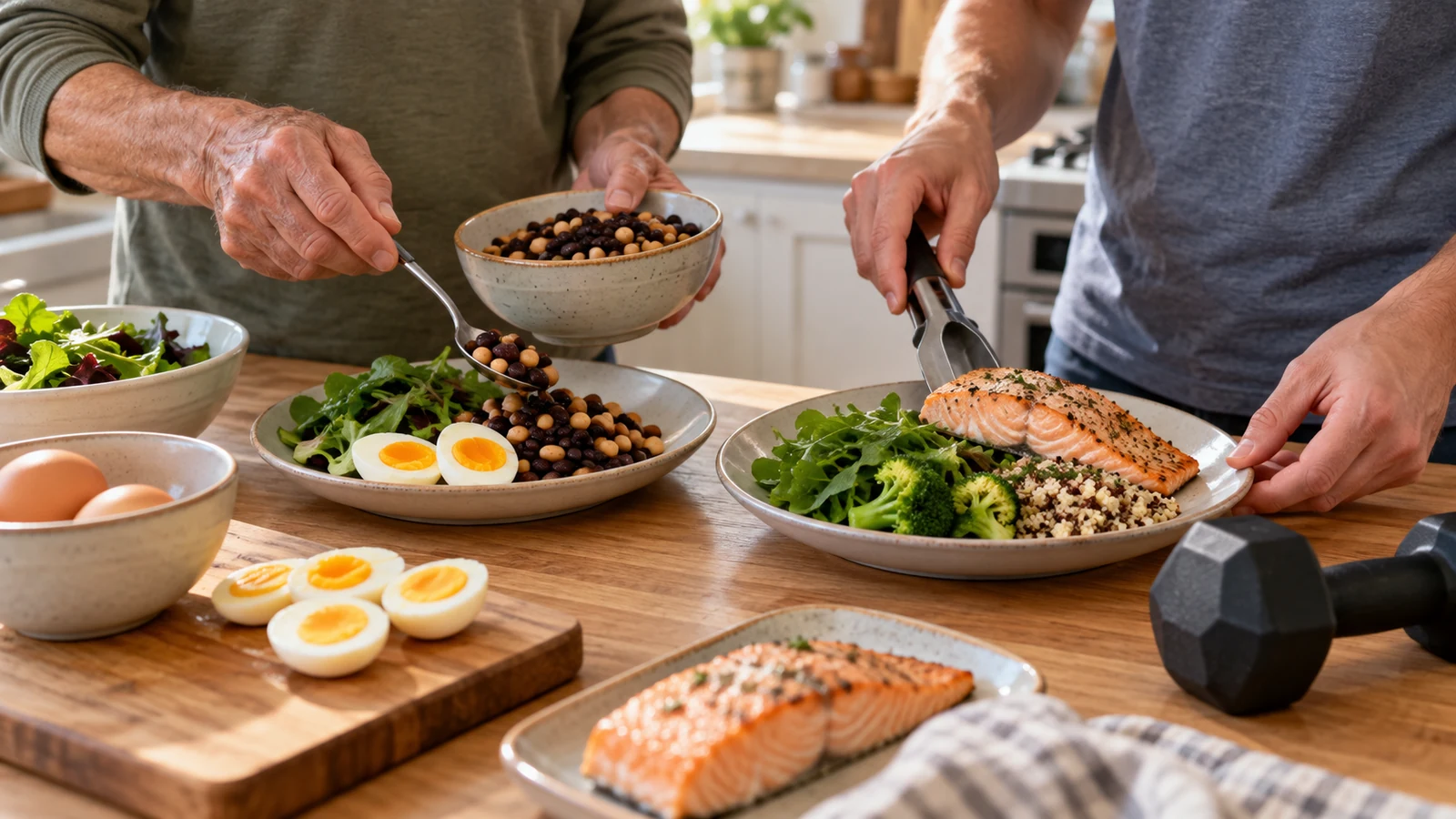
There is no single protein target that fits every person. How much protein you need depends on your size, routine, and life stage:
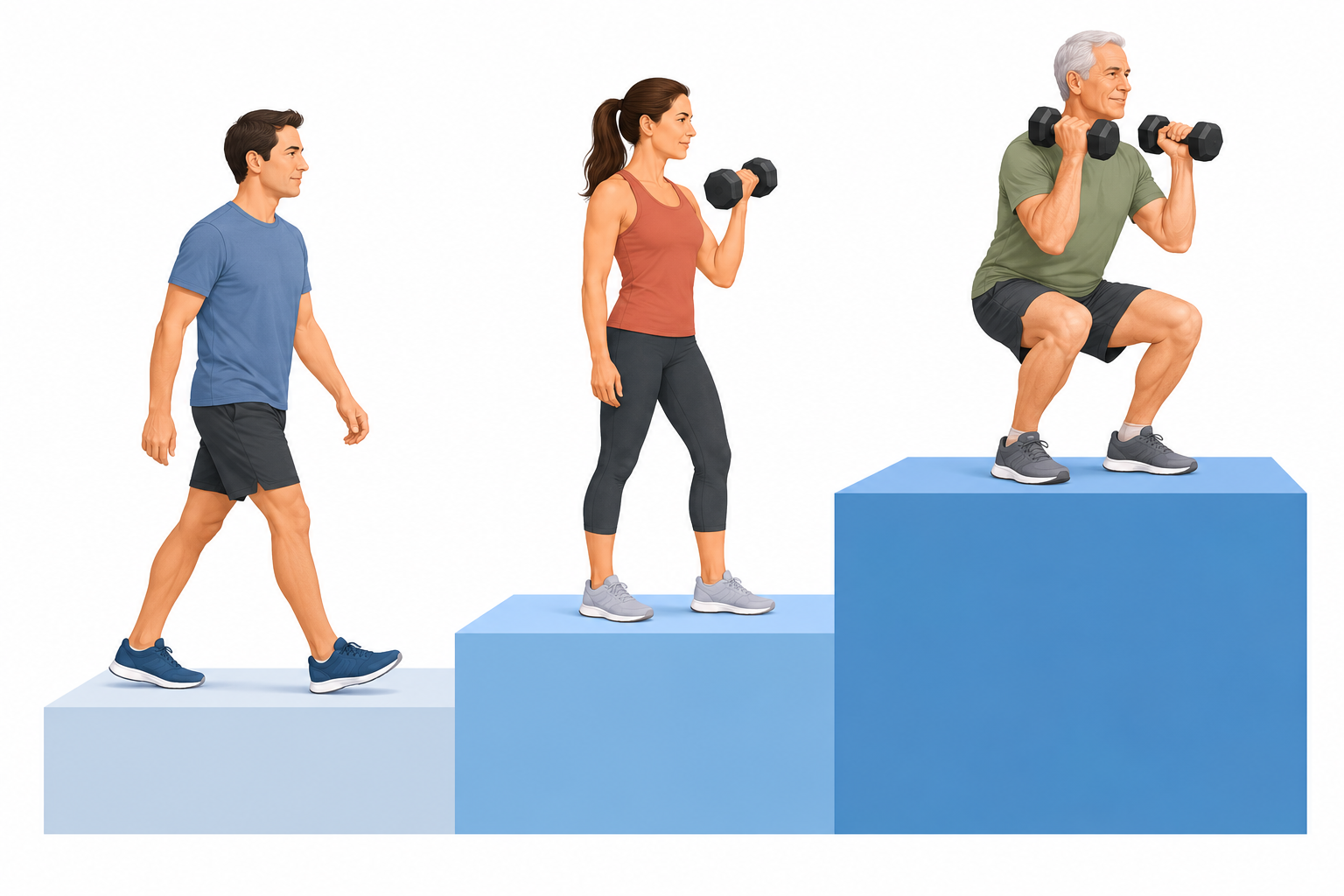
- Physical Activity: Regular exercise signals your muscles and connective tissues to adapt and rebuild, which naturally raises your overall protein needs.
- Aging: As adults get older, muscles become somewhat less responsive to everyday maintenance signals. Eating enough protein across meals, combined with regular strength training, helps protect strength and mobility over time.
- Health Status: Recovering from serious illness or injury temporarily raises repair needs. On the other hand, people with specific health conditions, such as advanced chronic kidney disease, may need to manage their protein intake under a doctor's guidance.
Protein powders or shakes can be a convenient shortcut on busy days, but ordinary groceries provide all the protein you need.
Protein Needs Change With Your Life
Checking Your Next Meal
When you sit down to your next meal, you can use a quick visual check:
- Look for the protein anchor: Is there a recognizable source on your plate, such as eggs, lentils, poultry, tofu, beans, fish, or yogurt?
- Check the rest of the plate: Pair that protein with carbohydrates or fats for energy, along with vegetables or fruit for fiber and micronutrients.
Educational content only. It is not individual medical advice.