
The training session ends in an hour. The physical result is decided over the next day or two, while you think nothing is happening.
Most people treat exercise like servicing a car. You run on a treadmill or do three sets of squats, check off a box, and call it an oil change. That picture is backwards, and it is a big reason people train for months without seeing real change.
An oil change only stops a car from getting worse. Your body is not a car wearing out with mileage; it is a living organism rebuilding itself around what you ask of it. Movement is not maintenance to keep parts running as they are. Movement is the instruction set that tells the body what to build.
Your body does not experience a workout as generic fitness. It experiences a stress signal. A stress signal is any physical demand that forces a biological system out of balance, challenging muscle fibers, connective tissues, the heart, lungs, or nervous system beyond their current capacity. Once that signal lands, the body spends the next 24 to 72 hours deciding how to rebuild in response.
The exercise itself is just the delivery method:
- A heavy squat delivers mechanical tension across your quads, glutes, and hips, signaling the body to build denser muscle and stiffer connective tissue.
- A three-mile run delivers aerobic stress, signaling the heart and lungs to expand blood vessels and cellular energy machinery so the pace costs less effort.
- A mobility drill signals the nervous system that a joint position is safe, prompting it to release protective tension.
What your body does with that signal after you leave determines whether you become stronger, faster, and more resilient, or just tired and sore.
The Loop: Stress, Recovery, Adaptation

All physical improvement runs on a single biological loop. It consists of three stages that always occur in the same order: stress, recovery, adaptation.
First is stress. Stress is the disruption of biological balance. During a workout, you do not build fitness; you break tissue down. You drain cellular fuel, create microscopic tears in muscle fibers, strain connective tissue, and fatigue the central nervous system. Immediately after training, you are weaker, slower, and less capable than when you started. If the process stopped here, exercise would be nothing more than self-inflicted damage. People who train hard yet never improve are almost always stuck repeating this single step.
Second is recovery. Recovery is the biological process of repairing structural damage, replenishing fuel reserves, and restoring nervous-system function back to baseline. It requires sleep, calories, and dietary protein, which provides the raw building blocks for new tissue. Recovery is frequently ignored because it does not feel like work. Taking a rest day or sleeping eight hours looks unproductive from the outside. That is a mistake. Recovery is not an idle pause between workouts. It is the active construction phase. The workout places the order; recovery fills it.
Third is adaptation. Adaptation is the structural upgrade that leaves tissue more capable than it was before the stress occurred. The body is conservative with resources and will not build expensive tissue without a clear reason. When a survivable stress signal threatens damage, the body does not just patch tissue back to its starting point. It rebuilds it slightly stronger, denser, or more efficient so that the same demand causes less disruption next time.
In exercise science, this upgrade is called supercompensation: the temporary rebound window in which physical capacity rises above baseline after recovery is complete.
This window typically opens between 24 and 72 hours after training, though that timeline is a general range that varies by tissue type and stress intensity. If you apply a new stress while capacity sits at the peak of that curve, you build on the gain. If you wait too long, the upgrade fades to conserve energy. If you train too soon, you pile new damage onto an unfinished repair.
- 1. Stress
- Role: The Signal
- What happens in the body: Tissues suffer micro-damage, fuel depletes, and capacity drops below baseline.
- What it requires: A physical demand challenging current capacity.
- 2. Recovery
- Role: The Repair
- What happens in the body: Damaged tissues rebuild, fuel stores replenish, and the nervous system resets.
- What it requires: Sleep, protein, calories, and time away from the stress.
- 3. Adaptation
- Role: The Payoff
- What happens in the body: Tissues rebuild above baseline (supercompensation) to handle future demand.
- What it requires: Completing recovery before imposing the next major stress.
Stress without recovery is accumulated damage. Recovery without stress is just rest. You need both, in that order, for the loop to pay out.
The SRA Supercompensation Waveform
Exercise does not build tissue. Mechanical loading induces micro-trauma and acute neuromuscular fatigue; biological supercompensation crowns only during the subsequent anabolic restitution window.
Mechanical Strain
External load registers at baseline. Acute neuromuscular fatigue begins; the stress signal is placed, not yet paid out.
Catabolic Nadir
Performance drops below homeostatic baseline. Myofibrillar protein synthesis peaks while tissue is still in structural deficit.
Supercompensation
Capacity crowns above baseline. The optimal re-loading window — tissue is temporarily more capable than before the stress.
Involution / Decay
Without a new stimulus, gains fade back toward baseline. Re-loading too early traps the loop in chronic maladaptation (dashed red curve).
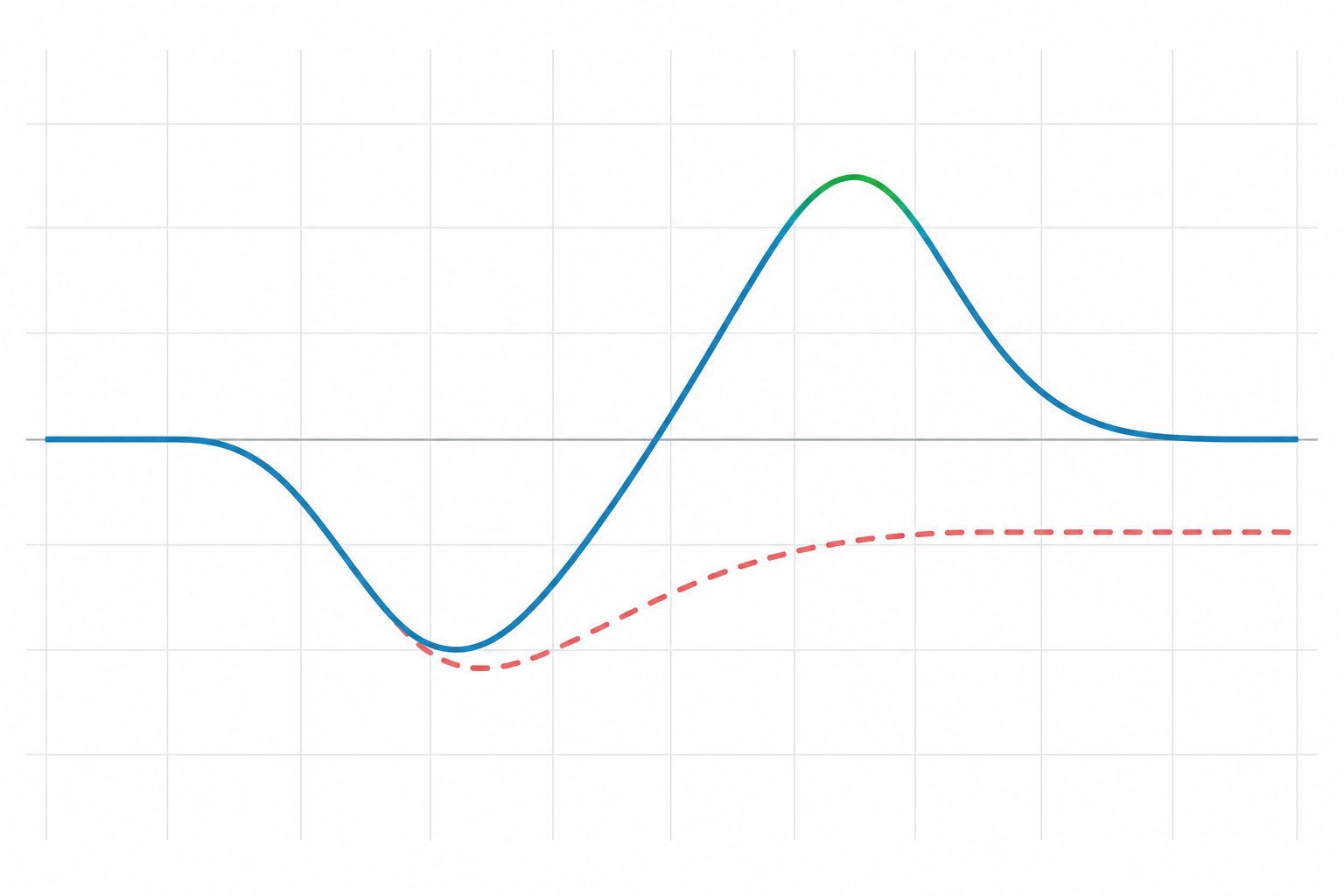
36h Restored
48h–72h Apex
96h Involution
The workout places the order; recovery fills it.
The Callus You Already Understand

You already understand this loop intuitively because you have seen it work on your hands.
Spend an afternoon digging in the yard with a shovel. By evening, your palms are tender, red, and raw. That is the stress signal. The friction overwhelmed the surface layers of skin, producing microscopic damage and localized inflammation.
If you rest for three or four days, the skin repairs itself. If you return to the shovel week after week, the skin does not just return to normal. Your body recognizes that friction is an ongoing demand. It responds by laying down denser layers of keratin directly over the friction points. A callus forms.
Nobody had to explain supercompensation to your hands. Living tissue exposed to repeated, recoverable stress does not just heal; it upgrades in the exact direction the stress came from.
Every structural system inside your body follows this exact principle. At the cellular level, mechanical tension and metabolic stress trigger biochemical pathways that tell your genes to build new proteins and expand cellular powerhouses. Different tissues simply run the loop on different clocks:
- Muscle: Muscles have a rich blood supply delivering nutrients, oxygen, and hormones rapidly. They adapt relatively quickly, showing measurable structural changes within weeks of consistent signaling.
- Tendons and Ligaments: Connective tissues have a limited blood supply. They adapt by stiffening and remodeling collagen fibers, but their clock runs on months rather than weeks. This is why people often develop tendon pain: their muscles get stronger faster than their tendons can remodel.
- Bone: Bone is living tissue that responds to mechanical load and impact. Compressive forces prompt specialized cells to deposit mineral density over months and years.
- The Cardiovascular System: Sustained aerobic effort prompts the heart to pump more blood per beat, expands capillary beds in working muscle, and multiplies cellular mitochondria to process energy efficiently.
Different tissues, different timelines, but the same underlying loop. The callus is simply the version you can see.
The Mechanotransduction Signaling Cascade
Living cells do not read words; they read mechanical tension. Tensile strain across cell membranes is converted into intracellular biochemical signals that alter gene transcription.
mTORC1 Ribosomal Assembly
High load near failure activates mechanosensitive mTOR complex 1. Phosphorylates p70S6K and 4E-BP1 to accelerate myofibrillar protein synthesis and add sarcomeres in parallel.
Specificity: The Body Answers Only the Question You Asked
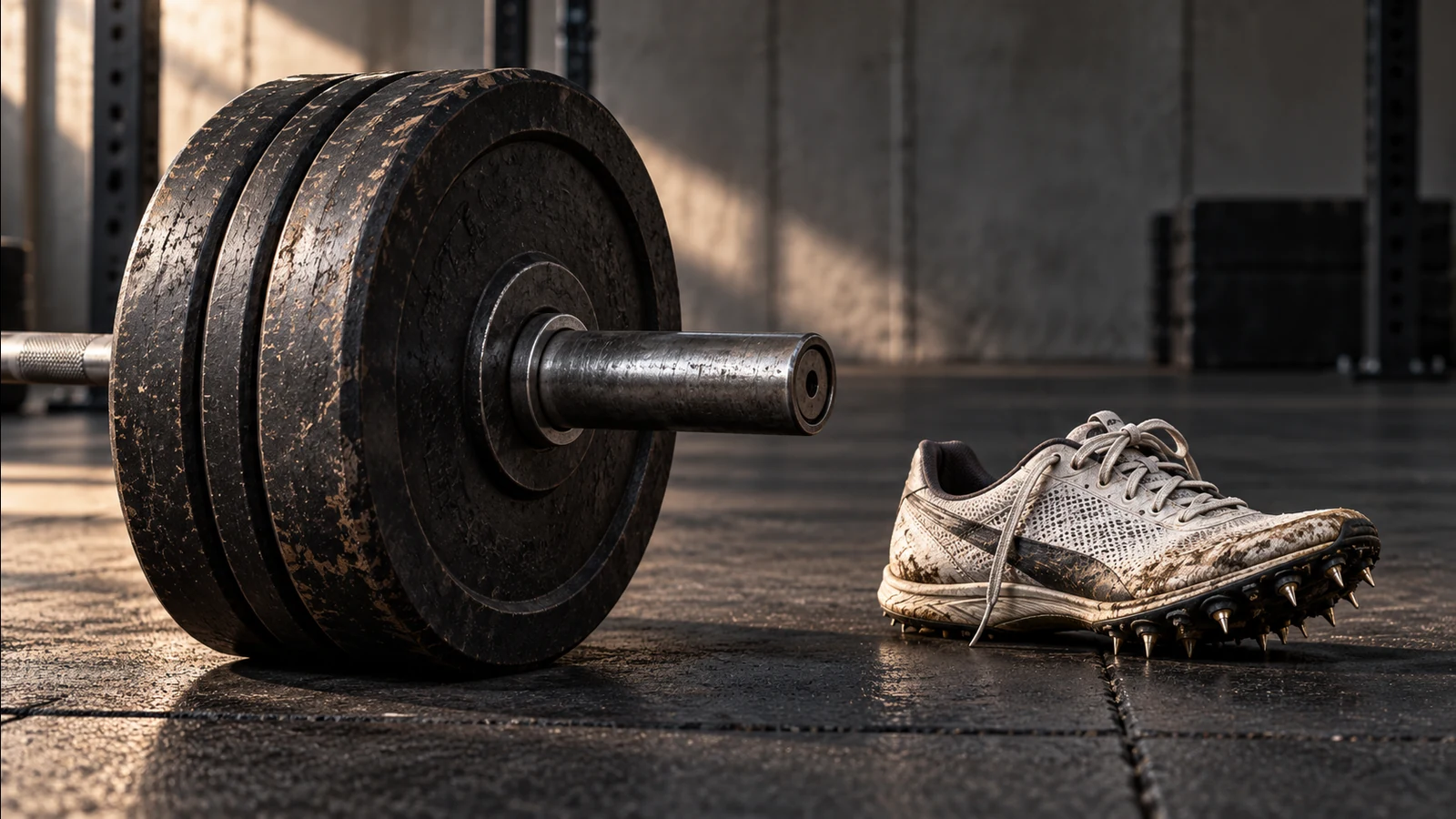
The body does not adapt toward a vague concept called fitness. It adapts with strict precision to the exact demands placed upon it.
This rule is known as the SAID principle: Specific Adaptation to Imposed Demands. It states that the body adapts directly to the specific type, load, speed, and energetic environment of the stress it experiences.
A competitive powerlifter and a marathon runner are both in peak condition, yet their physical adaptations are opposite. The powerlifter exposes muscles and the nervous system to brief, maximal loads, prompting the body to thicken muscle fibers and maximize neural drive. The marathoner exposes tissues to millions of low-force contractions, prompting the body to expand cardiovascular capacity and mitochondrial density while shedding excess muscle mass. Both bodies followed the SAID principle perfectly, spending energy only on what was asked of them.
This principle explains why training progress stalls. If you run the same three-mile route at the same pace or lift the same weight for the same repetitions every week, your body finishes adapting to that specific demand. Once the internal callus is thick enough to handle the workload, that workout is no longer a stress signal. No new repair order is placed, and adaptation stops.
Progress requires progressive demand. To keep adapting, you must periodically increase the signal: add weight, adjust speed, increase distance, or alter rest periods.
When the Loop Breaks
The entire model assumes that recovery happens between stress signals. When it does not, the system begins to degrade.
Return to the shovel. If you dig until your palms are raw, and then pick up the shovel the next morning to dig again, you do not get a callus. The raw skin tears open, bleeds, and breaks down.
This is what happens internally when training sessions are stacked on top of incomplete recovery. When a second stress signal lands on tissue that is still in a deficit state, the body cannot supercompensate. Performance drops further below baseline. If this pattern continues for weeks, it produces chronic overuse injuries, persistent joint inflammation, systemic fatigue, and hormonal disruption: the state known as overtraining syndrome.
Key idea
Most training programs do not fail because people train too little. They fail because they never allow the loop to close. They treat the stress as the accomplishment, piling fatigue onto fatigue, while ignoring the rebuild that actually delivers the result.
The Entire Idea in One Picture
Whenever training feels complicated, return to the callus:
- Stress is the friction of the shovel against your palm.
- Soreness is the raw skin: temporary damage and the cost of the session, not the gain.
- Recovery is the time away from the shovel, letting rest and food rebuild the tissue.
- Adaptation is the thickened skin that grows back to handle the next bout of work.
- Specificity is why the callus forms only where the tool pressed into your hand.
Educational content only. It is not individual medical advice.