
Prerequisites
The Biological Bottom Line
CJC-1295 knocks on the GHRH receptor front door, while Ipamorelin knocks on the Ghrelin receptor side door. Together, they trigger an amplified endogenous GH pulse.
Unlike synthetic exogenous GH (HGH) which suppresses pituitary somatotropes and shuts down natural production, secretagogues work within your body's natural somatostatin feedback system.
Administered before sleep, secretagogues amplify the natural slow-wave sleep surge of growth hormone, enhancing deep tissue repair and collagen synthesis without daytime insulin resistance.
Ipamorelin is highly selective for the GHSR-1a receptor, stimulating GH release with zero elevation of stress hormones like cortisol or prolactin.
Growth hormone is a master protein messenger directing tissue repair, protein synthesis, and fuel metabolism. The pituitary is a small endocrine gland at the base of the brain that releases chemical commands. Inside that gland, somatotroph cells build and release growth hormone into the blood. In a healthy adult, this release is pulsatile, arriving in sharp sleep bursts followed by valleys of near-silence; a blood draw at two in the afternoon does not capture a night. Two terms establish the core divide: endogenous describes substances produced naturally inside your body, while exogenous describes compounds manufactured outside and introduced through an injection, pill, or patch. A secretagogue is any compound that prompts an organ or cell to secrete its own endogenous supplies.
Two commercial products can promise more growth hormone and remain opposite tools. One supplies hormone made outside the body: exogenous recombinant human growth hormone. The other asks somatotroph cells for what they already make: secretagogue-class peptides. Marketers stamp both with an anti-aging label. That pitch is the problem, not the biology. A pituitary ask for your own pulse is real endocrinology. It is not replacement therapy, and it is not a youth switch.
A pulse is not a hose
Four definitions clarify the mechanics. Recombinant human growth hormone, known medically as somatropin, is an exact copy of human growth hormone synthesized in a laboratory using cultured cells. Half-life is the duration required for the body to clear half the active concentration of a compound from blood. Negative feedback is an automated biological brake where circulating hormone tells the brain to dial down internal production. IGF-1, or insulin-like growth factor 1, is a downstream messenger produced primarily by the liver when growth hormone binds to liver cells, executing tissue-building and collagen-repair commands.
The spine image is simple: a pulse is a timed ask plus a clearance; a hose is occupancy that stays high. Injected somatropin is closer to the hose; secretagogues are sold as closer to the pulse. Neither earns the word anti-aging. When you inject exogenous growth hormone, blood levels rise from the outside. The brain detects external hormone and leans on negative feedback, quieting somatotroph cells. How complete that shutdown is depends on dose, duration, and the person. Forum claims that any injection permanently destroys your axis are panic, but claiming replacement is a harmless add-on to natural production is false. It is not a free add-on. It replaces your production.
High occupancy has visible manners: fluid retention, carpal tunnel syndrome, and insulin resistance. Growth hormone mobilizes fat and blocks insulin during a brief pulse, but an unyielding, flat signal prevents normal glucose handling. Wrists swell, nerves compress, and fasting blood sugar climbs. Secretagogues are promoted as avoiding this by clearing quickly. Sometimes they do. Sometimes the analog chosen has a prolonged half-life that keeps occupancy high. Sometimes a late meal blunts the surge entirely. The sales pitch deletes the sometimes.
The Two Doors to the Pituitary (GHRH + GHRP Synergy)
GHRH Receptor (CJC-1295)
Binds the anterior pituitary GHRH receptor, stimulating adenylate cyclase to elevate intracellular cAMP and activate Protein Kinase A. This controls pulse amplitude and volume.
GHSR-1a Receptor (Ipamorelin)
Agonizes the pituitary ghrelin receptor, triggering phospholipase C, IP3, and DAG to mobilize intracellular calcium stores. This acts as the explosive pulse trigger.
It is not a free add-on. It replaces your production.
Two doors to the pituitary

The hypothalamus controls the pituitary using two distinct stimulatory paths, balanced by a master brake. GHRH, or growth hormone releasing hormone, is the brain messenger telling somatotroph cells to synthesize and release growth hormone. The ghrelin receptor is a docking port on somatotroph cells responding to ghrelin, the stomach's hunger hormone, by releasing pre-packaged growth hormone from internal granules. Somatostatin is the inhibitory hormone that acts as the body's emergency brake, shutting down growth hormone release regardless of incoming stimulation.
Synthetic secretagogues target these two entryways:
The Two Pituitary Doors
- Door 1 (The GHRH Receptor): Sermorelin, CJC-1295 (Mod GRF 1-29), and Tesamorelin signal somatotroph cells to synthesize and release growth hormone.
- Door 2 (The Ghrelin Receptor): Ipamorelin signals somatotroph cells to dump stored growth hormone from internal granules.
Combining these pathways in one injection is common clinic practice. Marketers claim this stack amplifies growth hormone release three to five times. In reality, combining a GHRH analog with a ghrelin agonist is an unproven hypothesis, not synergy math. Food also engages the brake: glucose and insulin lean on somatostatin, so dosing after meals blunts release. Furthermore, while marketers claim ipamorelin triggers a clean pulse with zero cortisol or prolactin elevation, non-clinical lifestyle data remains thin.
Label confusion adds to this. CJC-1295 often denotes Mod GRF 1-29, a fragment with a thirty-minute half-life that clears quickly like a pulse. CJC-1295 with DAC binds albumin, stretching its half-life past a week. Occupying receptors for days is a flat signal, not a pulse; choosing a sustained-release analog while seeking pulsatility is a category error. Sermorelin, an older GHRH fragment with pediatric diagnostic history, is short-lived on purpose, but familiarity is not an anti-aging protocol.
What injected HGH does
Recombinant human growth hormone (somatropin) is replacement therapy, bypassing the hypothalamus, pituitary, and somatotroph cells entirely. In conventional medicine, it treats documented pathology: severe adult growth hormone deficiency from pituitary tumors, pediatric growth failure, and severe wasting syndromes where the native axis is broken.
Selling replacement for midlife optimization is a different proposition. Injected somatropin elevates blood levels from the outside and holds them steady, with circulating IGF-1 following in lockstep. Under a flat signal lacking the clearance of a pulse, body composition shifts, fluid balance alters, and insulin resistance mounts. A clinic treating normal midlife decline as a deficiency is selling replacement hormone because replacement is easy to explain and deficiency sounds medical on an intake brochure.
Pulsatile Endogenous Secretagogues vs. Exogenous HGH Flatline
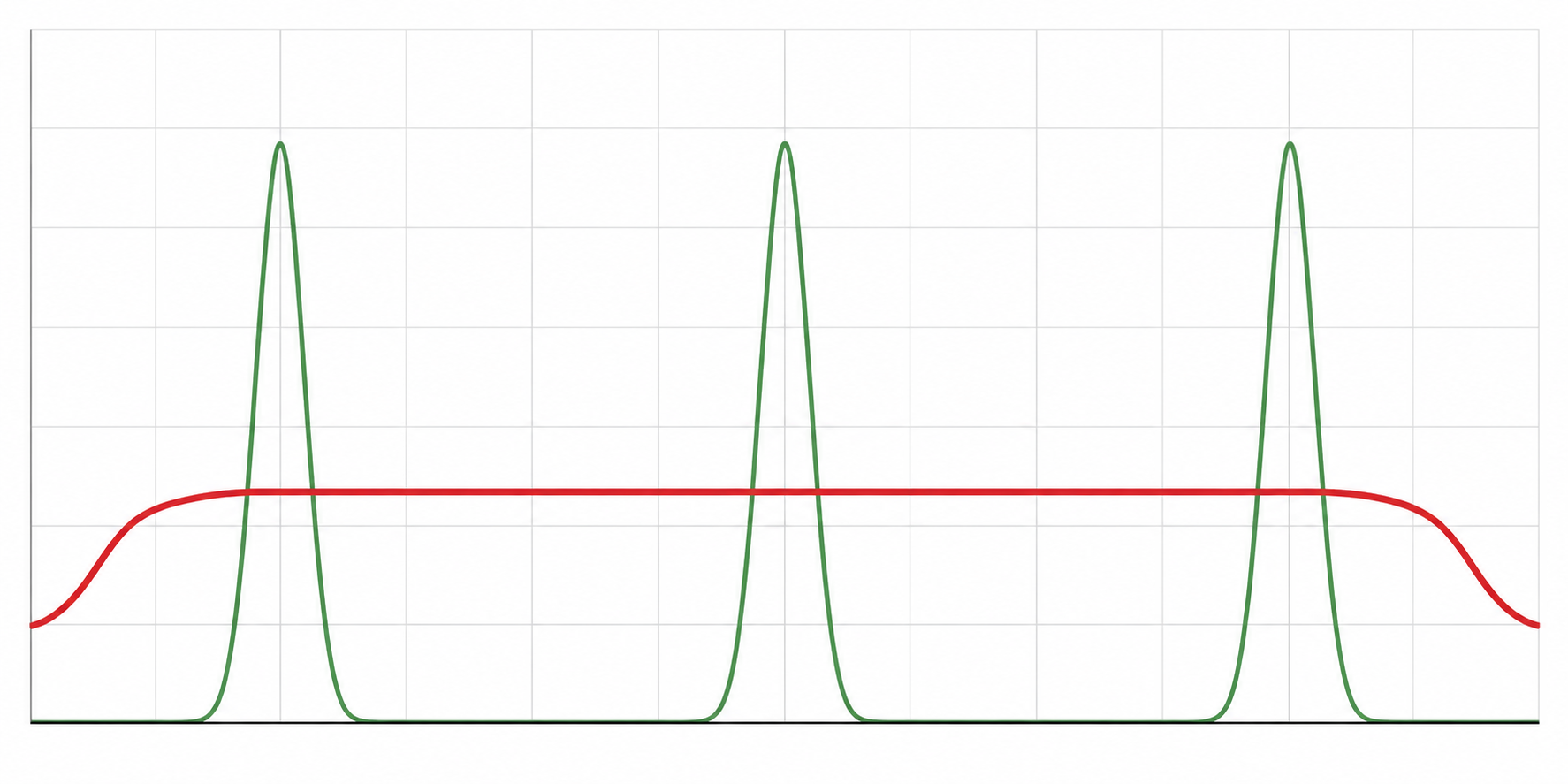
Exogenous recombinant HGH floods the bloodstream with continuous, unphysiological growth hormone levels. While it builds muscle, it completely suppresses the anterior pituitary and causes peripheral insulin resistance. Secretagogues (CJC/Ipamorelin) work with your natural physiology, amplifying your natural slow-wave sleep pulses while allowing daytime GH levels to clear to baseline, preserving insulin sensitivity.
CJC-1295 (Mod-GRF 1-29)
The Front Door. Synthetic 29-amino acid GHRH analog with 4 modified residues to resist DPP-4 enzymatic degradation. Increases the height and amplitude of your natural GH pulses.
Ipamorelin (Pentapeptide)
The Side Door. Selective GH secretagogue receptor (GHSR-1a) agonist. Triggers clean somatotrope exocytosis with zero elevation of cortisol, prolactin, or appetite stimulation.
CJC + Ipamorelin in 1 Vial
The Pituitary Symphony. Combining both in a single vial unlocks both front and side doors simultaneously. Produces a 3x–5x higher natural GH surge before sleep in one single pin.
Age-related decline is not a reversal story
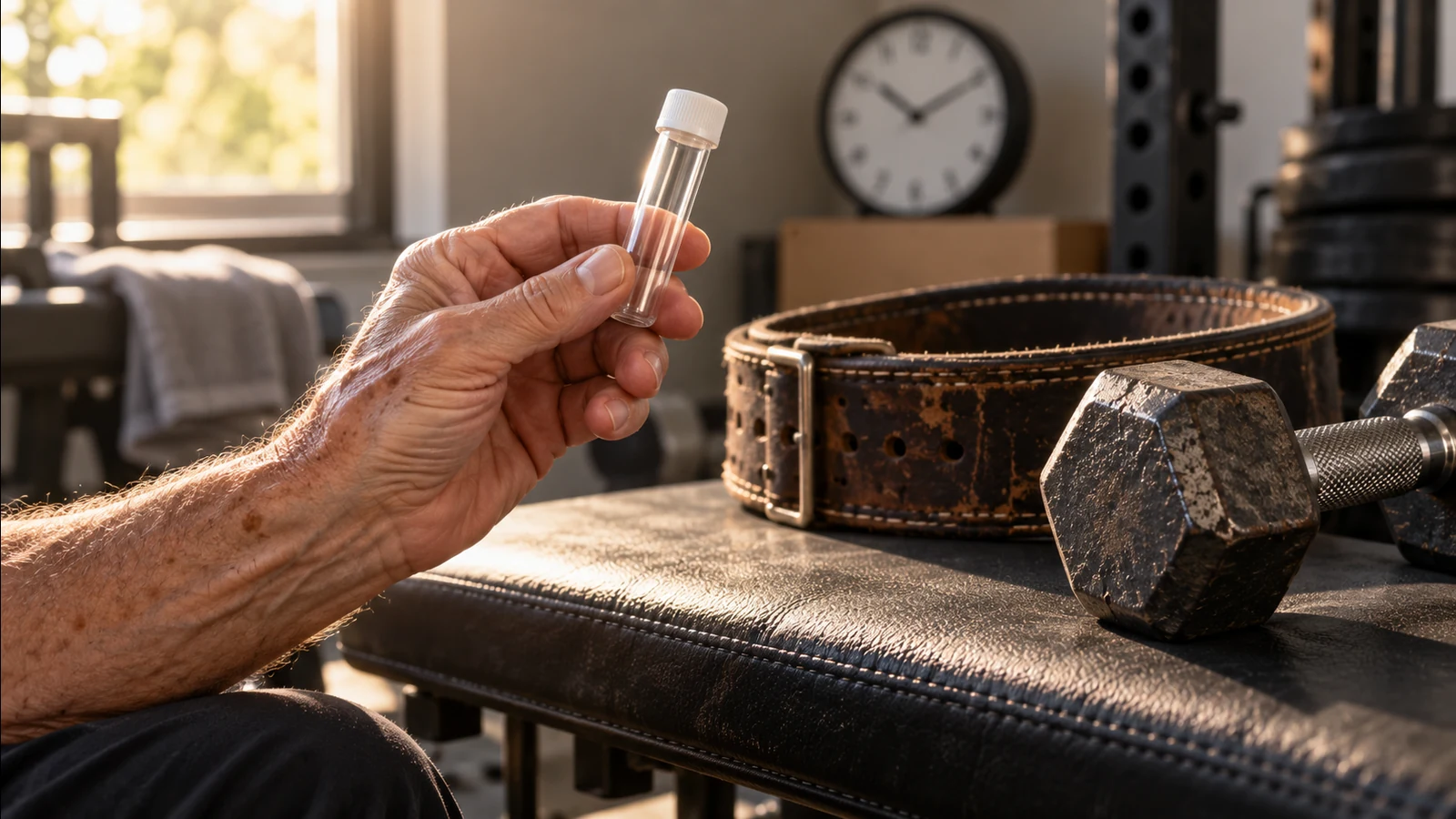
Endogenous growth hormone and IGF-1 decline steadily as adults age. Longevity marketing packages that decline into an emergency, claiming that restoring youthful levels erases a decade of aging. Correlation is the pitch's entire engine, but elevating a lab number does not rewind biological time.
Both hormones are anabolic and anti-apoptotic, promoting tissue building and protecting cells from programmed death. That explains collagen synthesis and recovery claims. It also explains why active malignancy is an absolute prudence stop: growth hormone and IGF-1 do not selectively repair only healthy cells, and flooding an undetected tumor with growth signals is a genuine hazard. A physiologic pulse is not acromegaly, the chronic disease of growth hormone excess causing bone and heart enlargement, but marketing blurs these boundaries.
Key idea
Physical repair cannot happen through signaling alone. As established in Guide 2, healing is a sequence requiring tissue load, nutritional substrate, and cellular rest. A peptide injection cannot substitute for that biological chain.
How to read a "more GH" claim
When evaluating any growth hormone claim, identify which physical object is on the table:
- A timed pituitary ask that clears quickly (a true secretagogue).
- A long-acting analog wearing pulse branding that stays elevated for days (such as CJC-1295 with DAC).
- External replacement hormone bypassing internal control (recombinant somatropin).
Tesamorelin serves as the honesty check. It is an FDA-approved GHRH analog for a single, narrow indication: reducing excess abdominal visceral fat in HIV-associated lipodystrophy. That approval proves GHRH analogs can alter visceral fat under medical supervision. But one approved drug for one medical condition is not a blanket license for unapproved research vials ordered online to treat general midlife aging.
The oral cousin highlights the same distinction. MK-677 (ibutamoren) is an oral ghrelin-receptor agonist with a twenty-four-hour half-life. It does not produce a pulse; it produces continuous receptor stimulation, bringing intense hunger surges, fluid retention, and worsened insulin sensitivity. Convenience is a value, but convenience is not pulsatility.
Ignore numbered-week marketing timelines promising deeper sleep by week two and fat loss by week four. Biology does not follow an advertising schedule. A bad week does not prove the class is fake, but an extra pulse cannot override lifestyle strain. In Guide 4, we outlined the governing chain: signal, receptor, response. If cellular receptors are desensitized or sleep hygiene is broken, the signal cannot force a response; a peptide injection timed for bed cannot rescue four hours of broken sleep.
This perspective clarifies where growth hormone sits. In Guide 7, we evaluated how GLP-1 receptor agonists manage appetite and metabolic signaling. Growth hormone secretagogues address pituitary output rather than metabolic satiety. In Guide 9, we will turn deeper inside the cell to examine mitochondrial peptides and the claims surrounding NAD+ restoration.
The night was the architecture
Read the pattern of your biology, not an isolated laboratory snapshot. A pulse is not a hose. Secretagogues and recombinant growth hormone are opposite tools with distinct risks, different impacts on negative feedback, and different relationships with the pituitary. Anti-aging is a pitch. Age-related hormone decline is real, but reversing a decade is an unproven leap. Sermorelin, CJC-1295, tesamorelin, and ipamorelin are distinct compounds with unique pharmacology, not interchangeable youth elixirs. Combining GHRH and ghrelin pathways remains an experimental hypothesis, not verified arithmetic.
The cell and the week still do the heavy lifting. Signal, receptor, and response did not expire when growth hormone entered the conversation. A blood draw at two in the afternoon might look busy, but your body still requires deep sleep to repair. The night was always the architecture.
Educational content only. It is not individual medical advice.